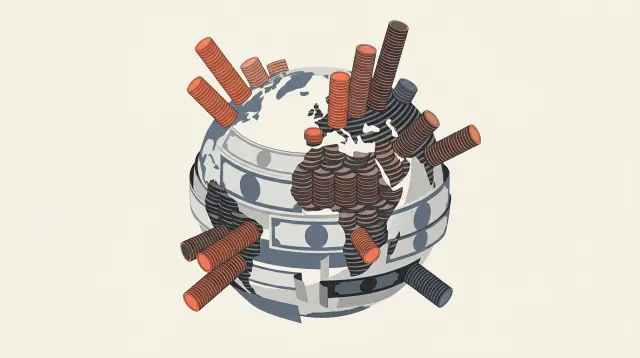
What national debt is
National debt, or government debt, is everything a government owes to its lenders. When a government spends more than it collects in taxes in a year, it has a budget deficit and borrows to cover the gap. The debt is the running total of those borrowings that have not been repaid.
Economists usually count general government gross debt: the debt of the central government plus states, regions, cities and social security funds. This is the figure the IMF publishes for every country and the one used across World Debt Clocks.
How governments borrow
Governments borrow mainly by selling bonds: promises to repay a fixed amount on a set date and to pay interest until then. The US sells Treasuries, the UK gilts, Germany Bunds. Bonds are sold at regular auctions and range from a few weeks to 30 years or more.
When a bond matures, the government usually pays it back with money from a new bond. This is called rolling over the debt. That is why national debt is rarely paid off: it is refinanced again and again, while new deficits add to it.
Who owns the debt
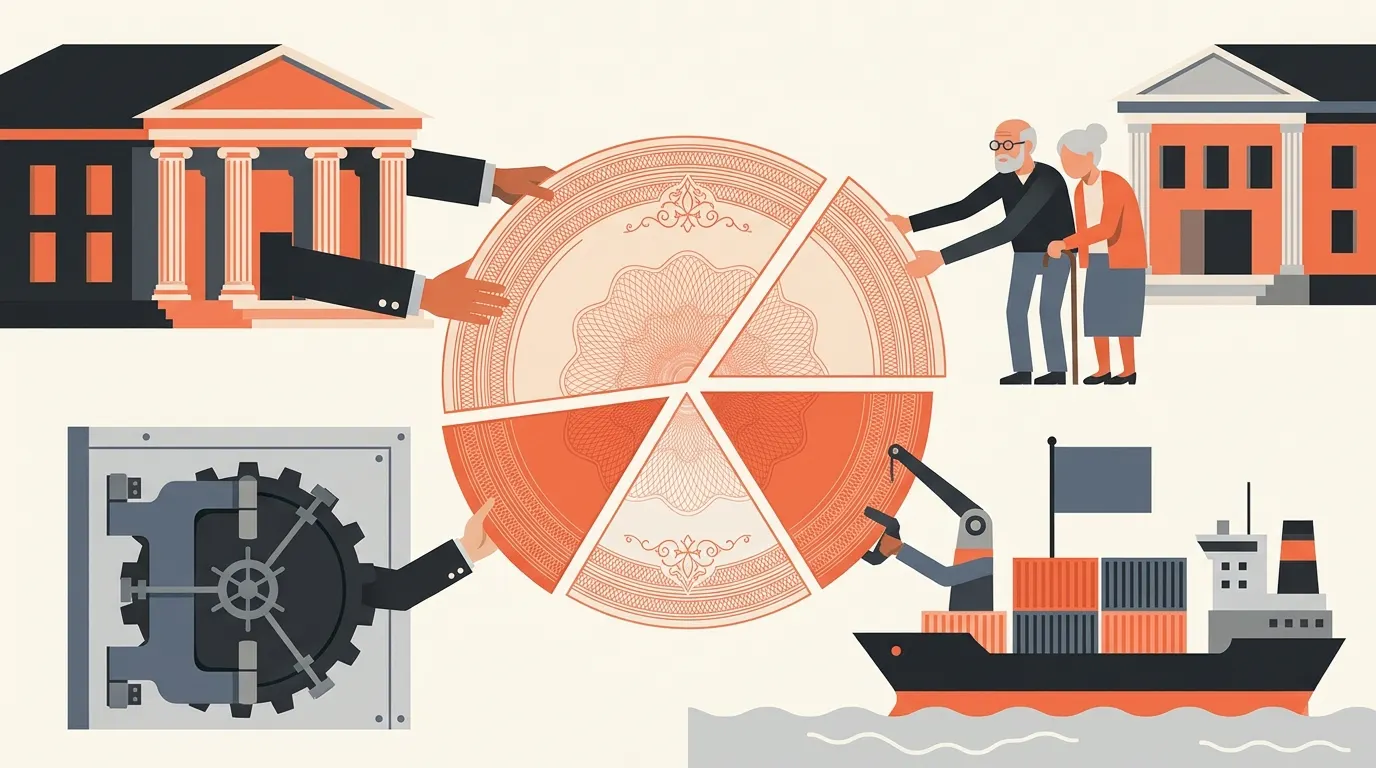
Whoever buys government bonds is a lender. Most national debt is held inside the country: by banks, pension funds, insurance companies, investment funds and ordinary savers. Central banks also hold large amounts, bought to steer interest rates. The rest belongs to foreign investors and foreign governments, which often keep their reserves in safe bonds of other countries.
So when people say a country "owes" money, much of it is owed to its own citizens and institutions, often through their pensions and savings.
Debt vs deficit
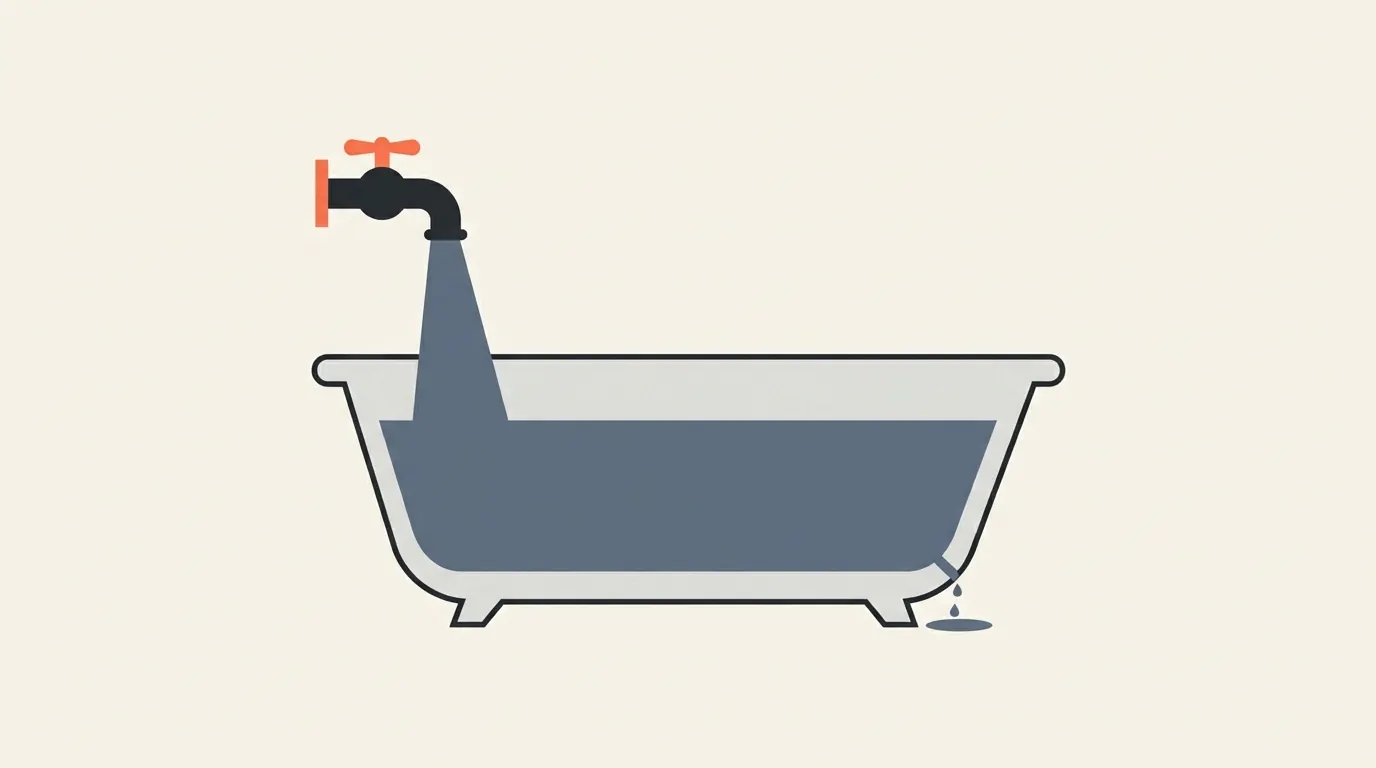
The deficit is a yearly flow: spending minus revenue in one year. The debt is a stock: the sum of all past deficits minus surpluses. A country can shrink its deficit and still see its debt grow, because any deficit, however small, adds to the total. Debt only falls in years with a budget surplus.
Interest: the cost of debt
Every bond pays interest, and interest is part of government spending. When rates are low, even a large debt is cheap to carry. When rates rise, old bonds are gradually rolled over at higher rates and interest bills grow, leaving less for schools, health care or defense, or forcing more borrowing.
Why debt is measured against GDP
A trillion dollars means very different things for a large economy and a small one. That is why debt is usually shown as a share of gross domestic product, the value of everything a country produces in a year. Debt to GDP shows how many years of national output the debt equals.
In 2026 the United States owes $41.39 trillion, 126.8% of its GDP. Japan owes less in dollars, $8.66 trillion, but 199.4% of GDP, the highest among large economies. Germany owes 64.6%, Italy 137.9% and Greece 136.0%. Compare all countries in the national debt by country ranking.
The ratio falls when the economy grows faster than the debt. Inflation helps too: it raises nominal GDP while old debt stays fixed. That is how many countries reduced their war debts after 1945 without paying them back.
Try it: how deficits and growth move the debt
Move the sliders to see debt to GDP over the next 20 years.
Gross debt vs net debt
Gross debt ignores what a government owns. Norway has a gross debt of 40.0% of GDP, yet its government also owns one of the world's largest sovereign wealth funds, worth far more than the debt. In net terms Norway is a lender, not a borrower. Debt clocks show gross debt because it is measured the same way everywhere.
When national debt becomes a problem
There is no single safe level. Japan carries debt of 199.4% of GDP at low interest because it borrows in its own currency, mostly from its own savers. Countries get into trouble when lenders stop trusting them: interest rates jump, rolling over becomes expensive and the government may default or need a bailout. That risk is highest for debt in a foreign currency, which a country cannot print, and for countries that already pay a large share of revenue in interest. Greece in 2010–2012 and Argentina several times are well-known cases.
Why the debt clocks keep rising
Most governments run deficits most years, so their debt grows almost every second. World government debt rose from $21.78 trillion in 2001 to $121.09 trillion in 2026, 5.6 times as much, and from 63.9% to 94.6% of world GDP. In the United States the debt already comes to about $120,729 for every resident.
World government debt to GDP, 2001–2031
Hover a bar for the exact value.
See it happen live on the world debt clock.
Frequently asked questions
What is national debt?
National debt is the total amount a government owes to its lenders. It builds up from every past year in which the government spent more than it collected in taxes and other revenue.
Who does a country owe its national debt to?
Mostly to holders of its government bonds: domestic banks, pension funds, insurers, investment funds, households, the country's own central bank and foreign investors, including foreign central banks.
What is the difference between debt and deficit?
The deficit is the gap between spending and revenue in one year. The debt is the sum of all past deficits minus surpluses. A deficit adds to the debt; a surplus can reduce it.
Does a country ever pay off its national debt?
Rarely in full, and it does not need to. Governments repay maturing bonds by issuing new ones. What matters is whether the debt stays affordable compared with the size of the economy and the interest it costs.